


Not everything that looks like silver is silver. Nickel silver—also known as alpacca, German silver or new silver—is an alloy of copper, nickel and zinc and contains no silver. This page shows Finnish marks used on nickel-silver and silver-plated objects.
Nickel-silver objects are often silver-plated. Brass and tombac objects can also be plated with silver. The surface may therefore contain real silver even though the object itself is not a precious-metal object.
A silver-coloured base metal
Nickel-silver marks
The appearance of these inscriptions varies. The name of the alloy may be written in full or shown as an abbreviation.
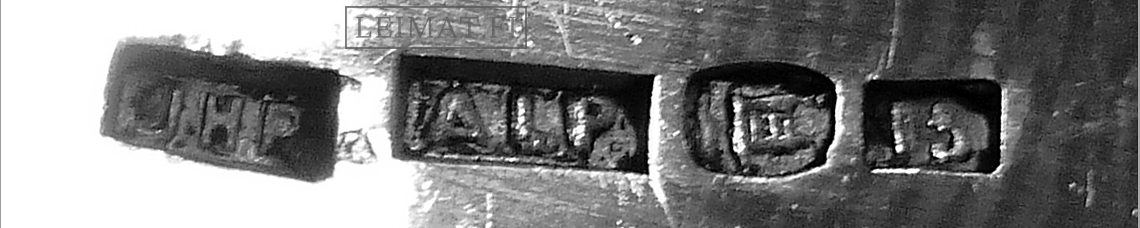
ALP
ALP is a common abbreviation for alpacca or nickel silver.
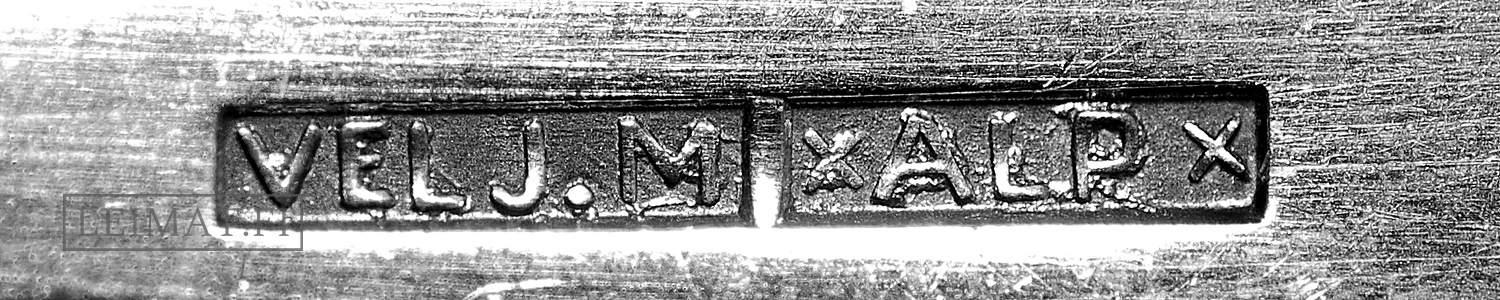
X ALP X
The abbreviation ALP may appear with other letters or symbols.
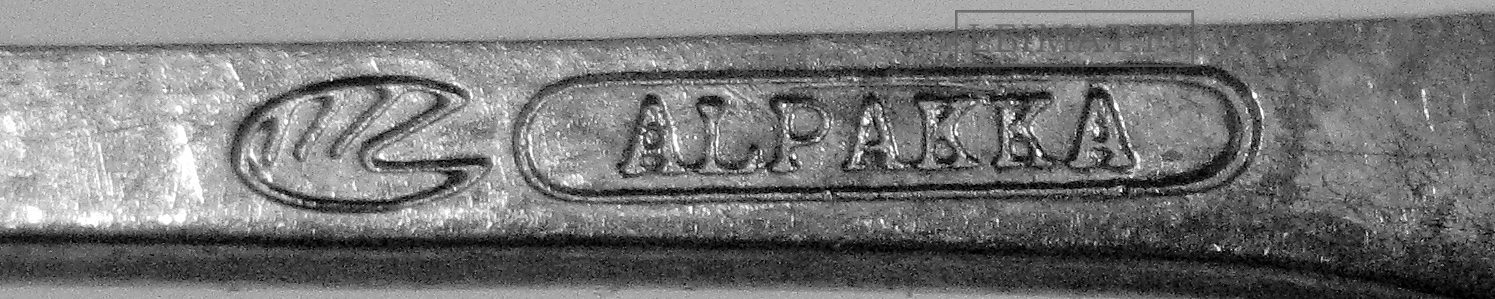
ALPAKKA
The Finnish name of the alloy is written in full.
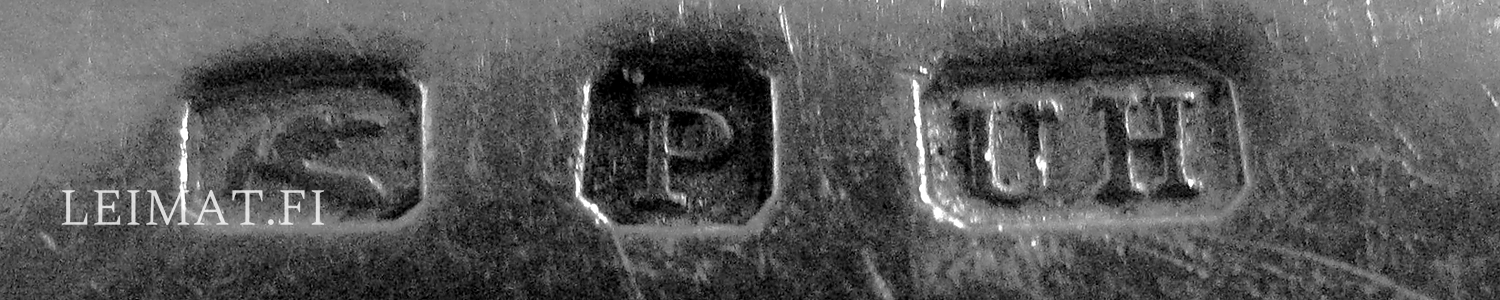
UH
UH abbreviates the Finnish term uusi hopea, meaning ‘new silver’.
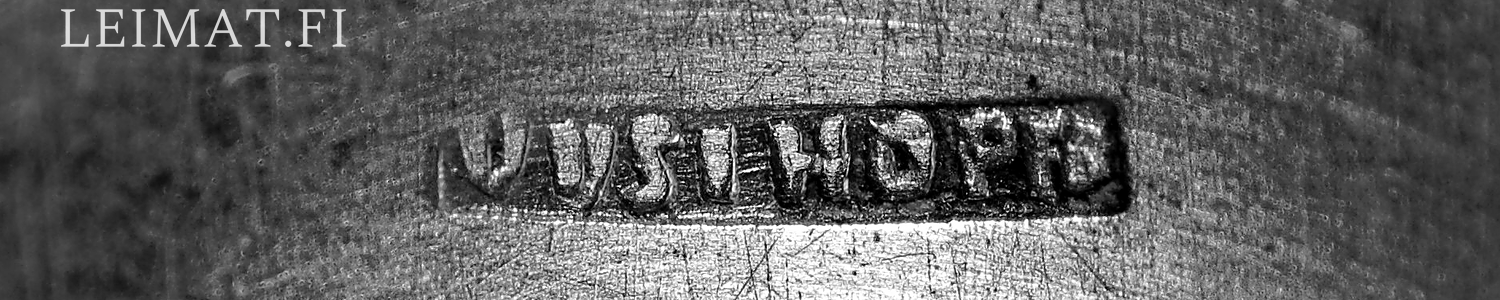
UUSI HOPEA
Uusi hopea, or ‘new silver’, is a trade name for nickel silver. Despite the name, the alloy contains no silver.
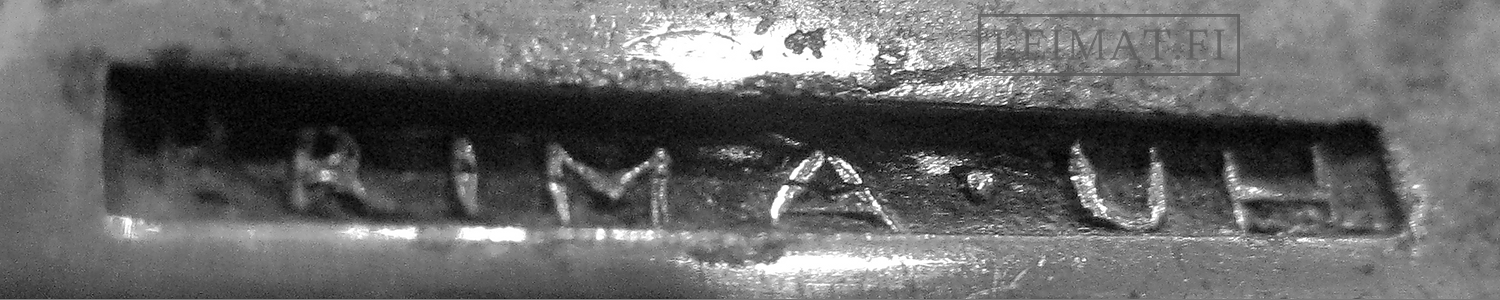
PRIMA-UH
A commercial inscription containing the abbreviation UH for new silver.
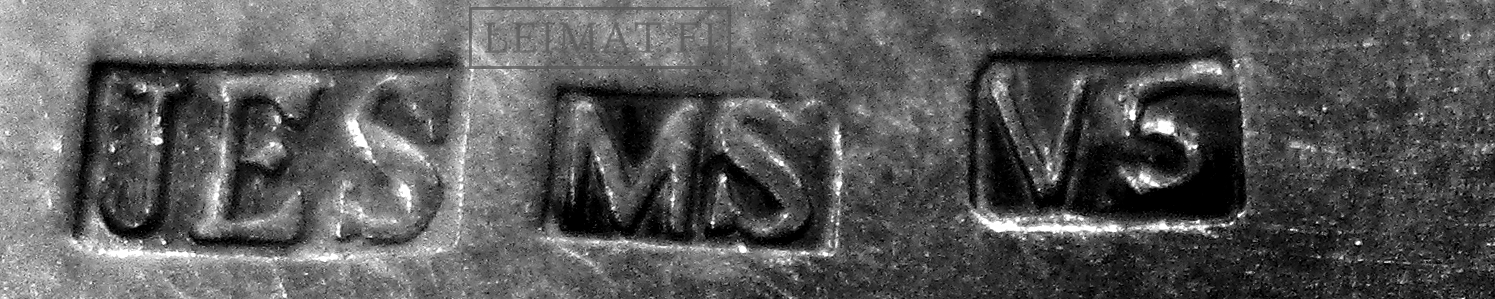
MS
An example of an MS inscription on a silver-coloured metal object.
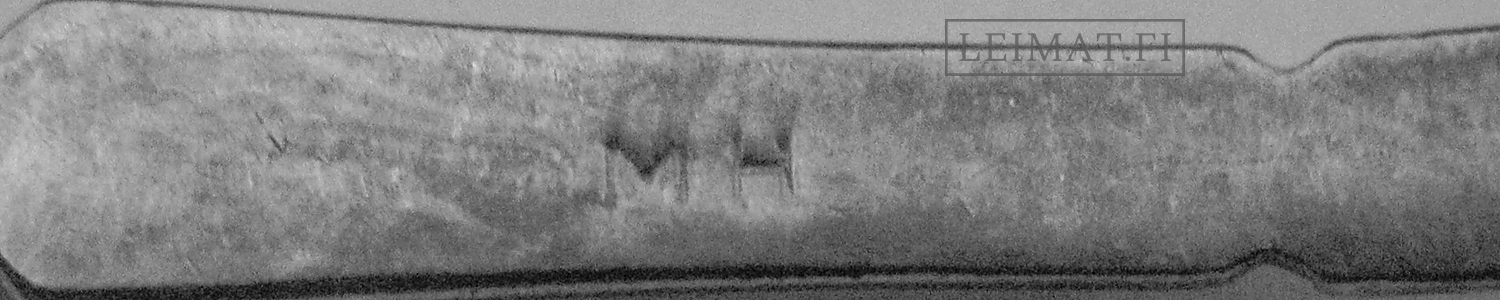
MH
An example of an MH inscription on a silver-coloured metal object.
A silver-plated surface
What does the number 90 mean?
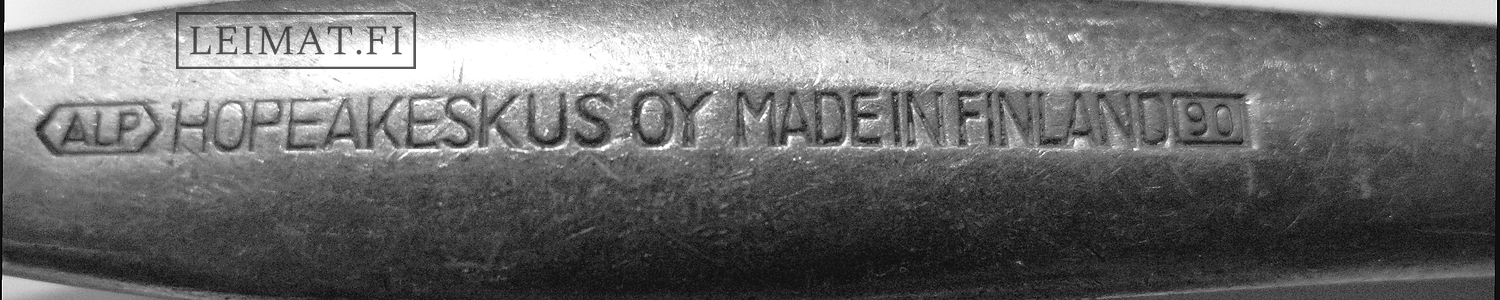
90
The number 90 indicates the quantity of silver used for plating, not the silver fineness of the object. It means that a total of 90 grams of fine silver was used to plate a dozen tablespoons and a dozen forks. On a small spoon such as the one shown, the coating contains approximately 1.5 grams of silver.