


A design mark is a brand’s or individual’s own mark that supplements the official row of marks on a precious-metal object. It may consist of initials, a symbol, a signature or a complete name.
Always compare a design mark with the object’s responsibility, locality, fineness, control and year marks. The same designer’s mark may appear on products made by different manufacturers, and its appearance can vary.
Design marks
A–G

A-G Eker
Anna Greta Eker (1928–1996) was born in Mariehamn and trained as an industrial designer. She moved to Norway in the 1950s, married the Norwegian precious-metal designer Erling Christoffersen and went on to design jewellery and silver objects herself.
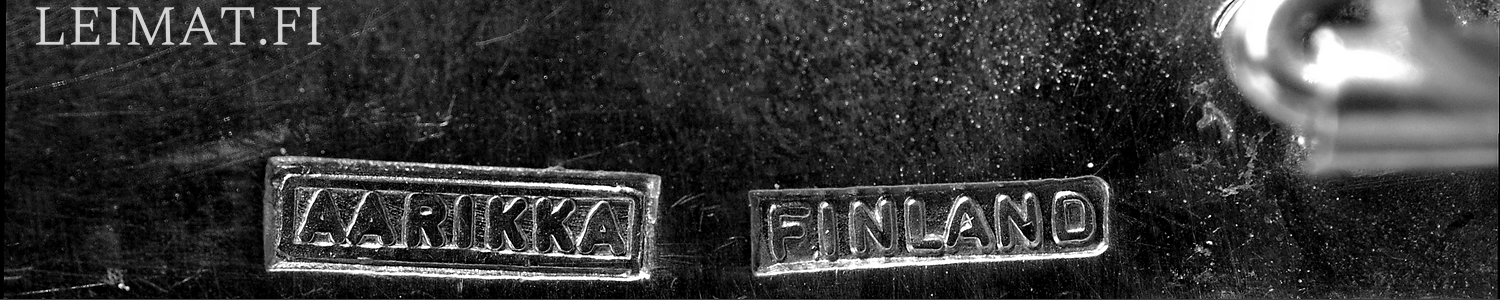
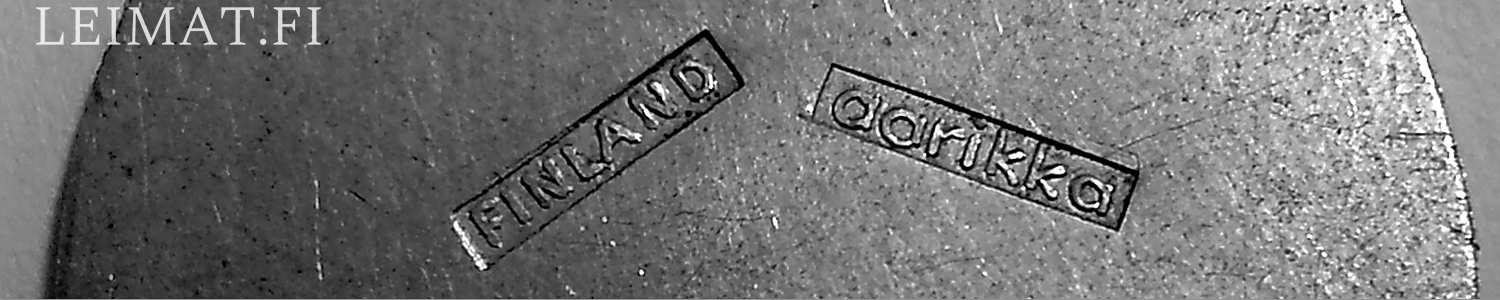
AARIKKA
Kaija Aarikka-Ruohonen (1929-2014), textile designer and distinguished entrepreneur. Studied at the School of Art and Design. Started designing jewellery in the 1950s, initially wooden buttons and jewellery. The mark is on a silver brooch from 1963. The maker's mark is RÅ (= Ralph Åkerfeldt, Helsinki).
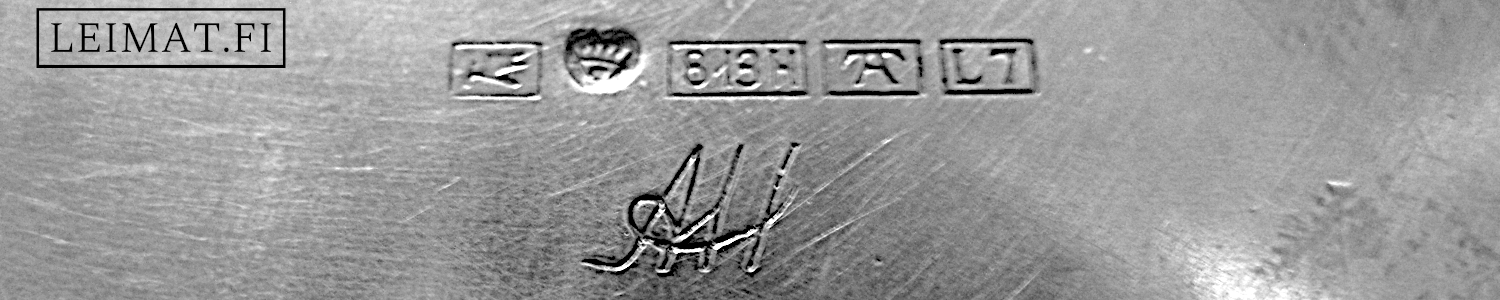
AH
Unknown artist. The mark appears on objects made by Kultateollisuus Ky during the 1950s and 1960s.
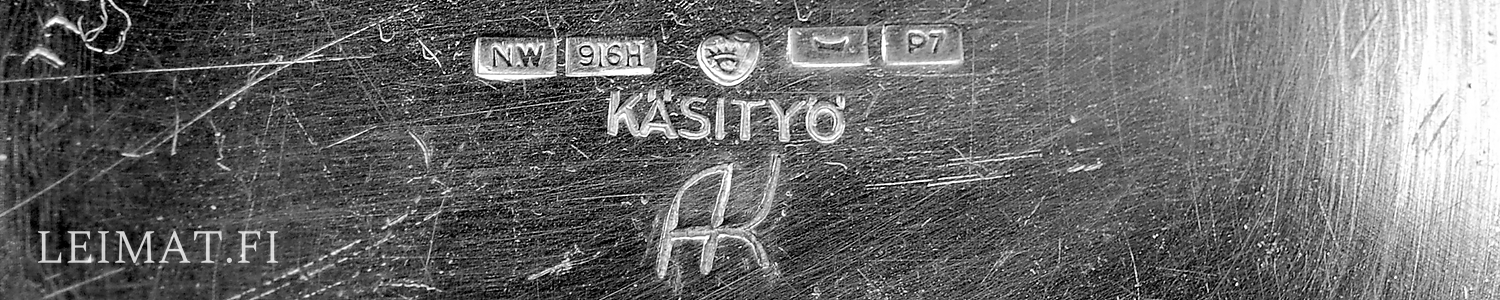
AK
Arvi Karanterä (1902–?), formerly Kajander, was a silversmith who worked for Westerback from the 1940s to the 1960s. He was a skilled craftsman who made prototypes for Tapio Wirkkala, among others. Karanterä specialised in Biedermeier coffee services, which he was permitted to make in his own workshop. His responsibility mark AEK was registered from 1970 to 1982.

AUKUSTI PAATOLA
Aukusti Paatola, artist. He designed jewellery for Kuopion Kultasepät Oy during the 1970s.

BeuteP
Danish goldsmith Ole Bent Petersen (1938–1998) designed silver objects for Kultateollisuus Oy during the 1950s. He qualified as a goldsmith in 1957 and continued his studies at the Danish College of Jewellery and the Royal Danish Academy of Fine Arts. Petersen ran his own workshop and also designed for Georg Jensen. The illustrated mark is on a silver ladle from 1958.

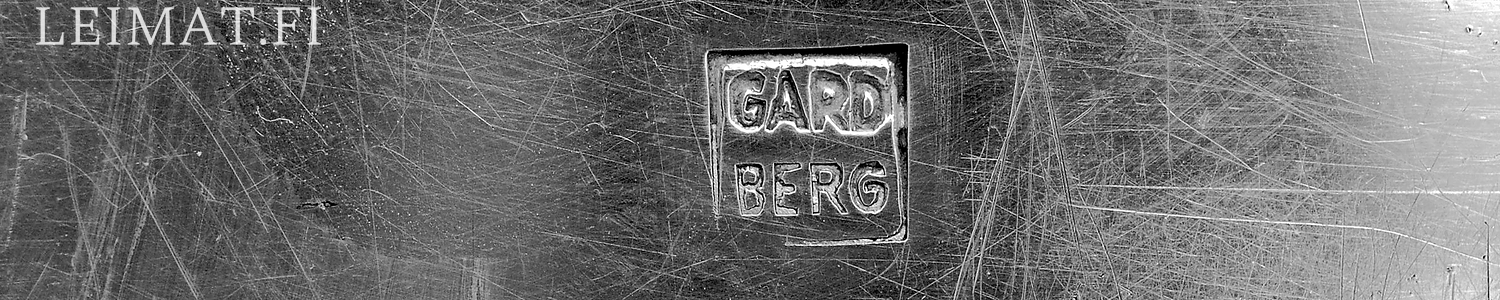


BG
Bertel Gardberg (1916–2007), silversmith, designer and academician. He graduated from the Finnish Goldsmith School in 1941 and continued his studies at the Central School of Applied Arts and in Denmark. Gardberg established a workshop in Helsinki in 1949 and worked in Ekenäs from 1974 to 2007. His own responsibility mark was BRG. The illustrated object was made by Sporrong Oy.
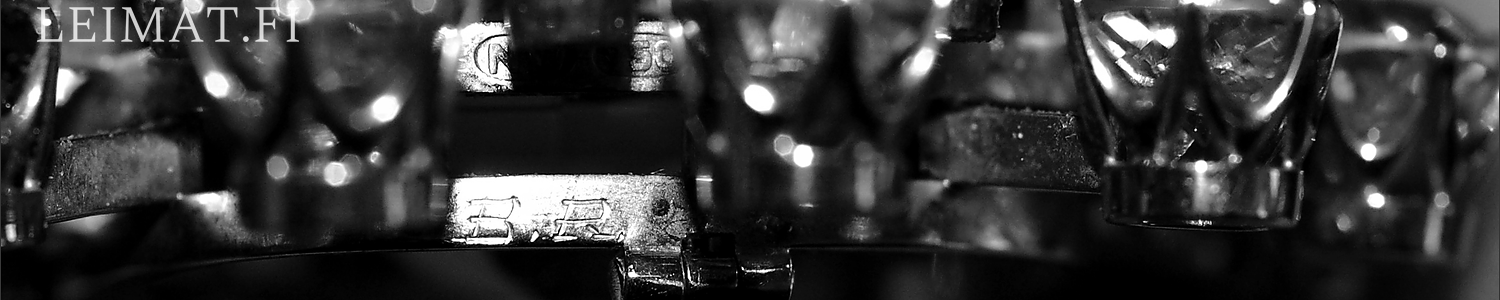
BR
Börje Rajalin (b. 1933), silversmith and designer. He studied and later taught at the Institute of Industrial Arts, designed jewellery, and served as Kalevala Koru’s chief designer and artistic director. Westerback also produced unique pieces designed by Rajalin. The illustrated mark is on a piece made by Westerback in 1960.

BS
Bror Sundgren, master goldsmith. Designed jewellery for Westerback Oy as their workshop foreman. The mark is on a ring from 1965.

BW
Lapponia Jewelry Oy responsibility mark (1963–2005), fineness mark, control mark, Helsinki locality mark, year mark for 1967 and Björn Weckström’s BW design mark. Weckström has designed for Lapponia since 1963.

ED
Bastion design 1999-2002.
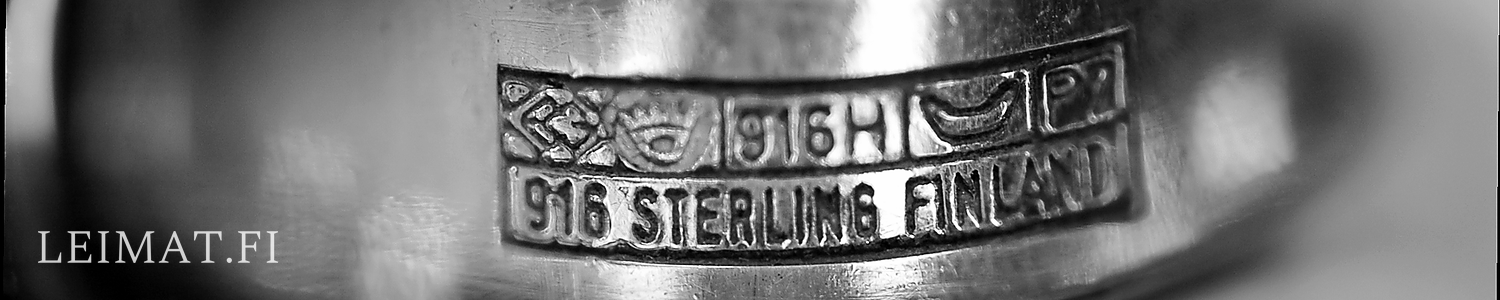
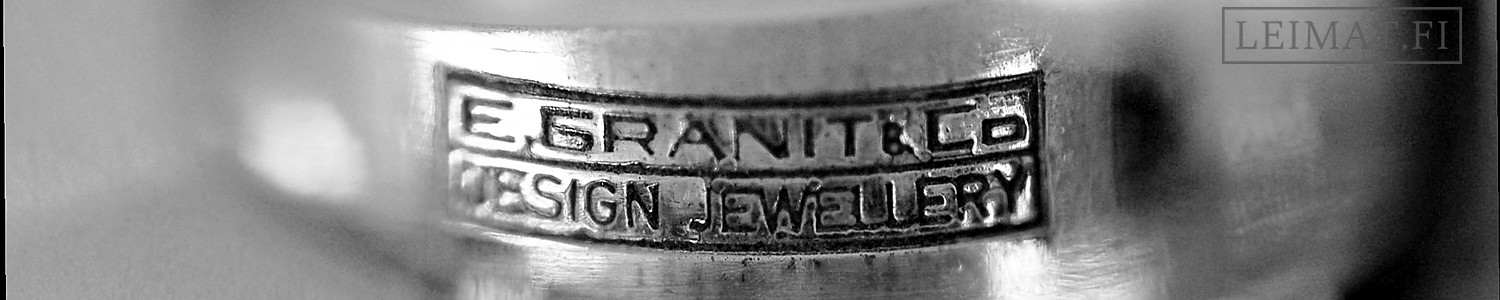

E. GRANIT & Co
Goldsmith Erik Granit (1930–1988) established his business in Helsinki in 1954. It produced hundreds of different models, most designed by Granit, although other designers were also commissioned. The business closed after his death in 1988.
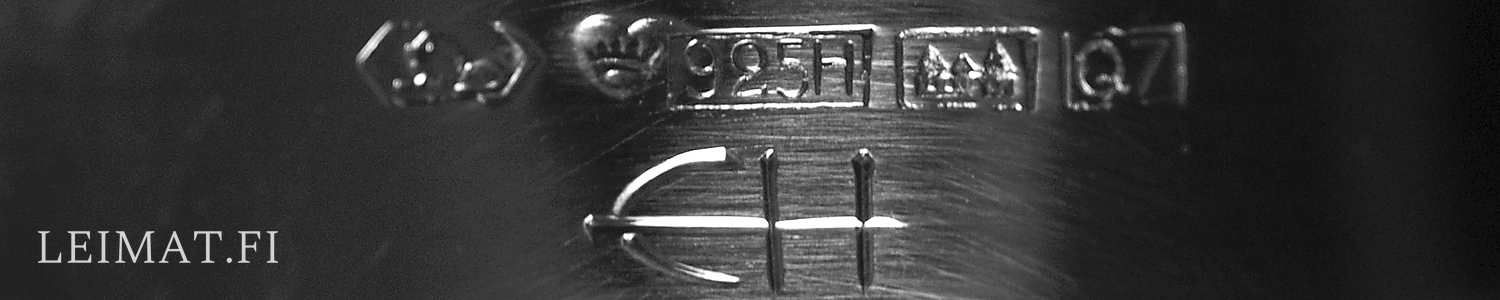
EH
Eva Hidström (1930-2022), enamel artist. The EH initial-engraving was used in Hopeakeskus in Hämeenlinna for enamelled objects between 1968 and 1971. Hidström heralds from an established family of Salo goldsmiths. She studied at the Ateneum in Helsinki, and in Switzerland. In addition to her own studio, she has worked for Tillander, Hopeakeskus, and in Germany. She has also taught at the Finnish Goldsmith School.
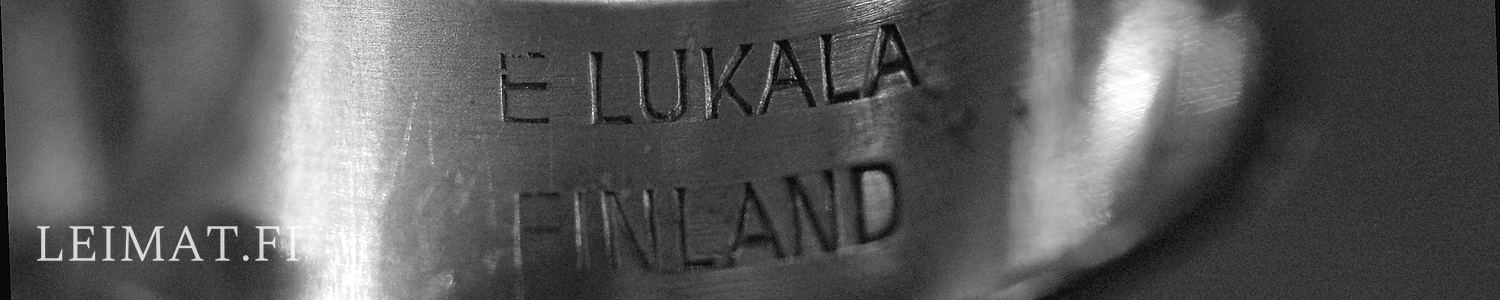
E LUKALA
Esa Lukala (b. 1945), visual artist. He studied at the Institute of Industrial Arts and designed for the textile industry. The mark is on a ring made by Kultateollisuus Ky.

EowE
Eric O.W. Ehrström (1881 – 1934), artist–cum-artisan. Studied at the drawing school of the Finnish Art Society and as a pupil of Akseli Gallen-Kallela. Teacher of metal repoussage at the Central School of Applied Arts and author of the book "Taidekäsityö" (Arts and Crafts). Skilled in repoussage and enamelling work. Designed jewellery, artwork and the crown of the King of Finland. The marks are on a cigar box made by Viri Oy in 1934, with Ehrström's repoussé decoration on the lid.
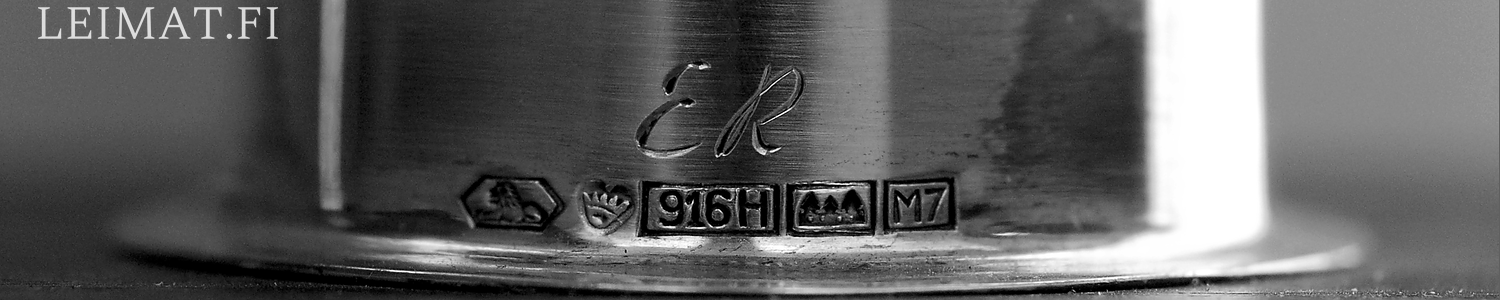

ER
Eero Rislakki (b. 1924), industrial designer. Studied at the Free Art School and the Central School of Industrial Arts. One of the first users of Finnish gemstones. Designed jewellery for Kalevala Koru and Westerback as well as silver objects for Kultakeskus. The mark is on a ring made by Westerback in 1959, and the engraved initials are on a Kultakeskus silver object from 1965.
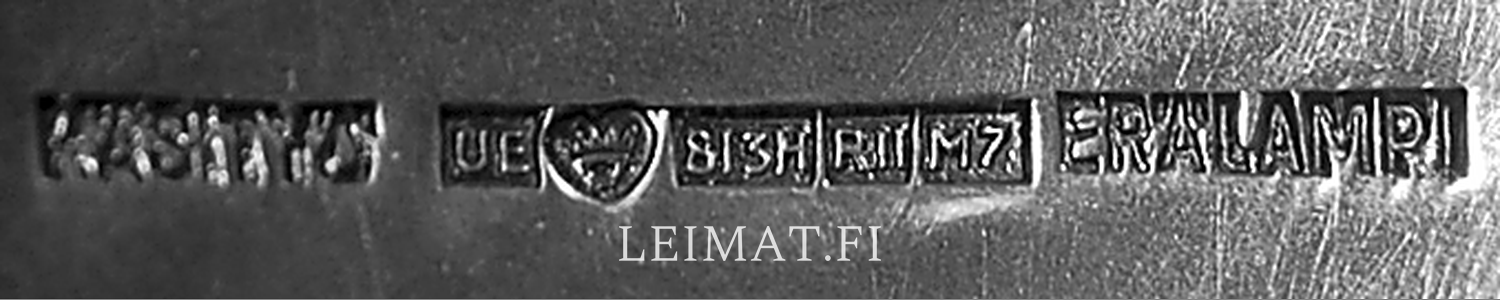
ERÄLAMPI
Unto Erälampi (1919–1974), silversmith. He trained as a silversmith at the vocational institute for disabled people during the 1940s. He shared a business with his sister, silversmith Salme Sarlamo (née Erälampi), who was principally responsible for its repoussé work. Her work is sometimes signed SS.

Finn Feelings
The common design mark for all Finnfeelings Oy jewellery designed by various goldsmiths and artists, such as Risto Immonen, Bernt Högkvist, Gerold Gerdes, Le Xuan Binh and Yvonne Konschelle.
Design marks
H–L

HELENA TYNELL (1918-2016)
Helena Tynell (1918–2016), glass designer. She studied at the Central School of Applied Arts and worked as a designer at the Riihimäki glassworks from 1946 to 1976. She also designed ceramics for Arabia and glassware in Germany. The mark is on a 1951 brooch made from glass and silver; goldsmith Railo Säde made its metalwork for Oy Taito Ab. Tynell was married to Taito’s director, Paavo Tynell. Her jewellery also carries the design mark H. Tynell.
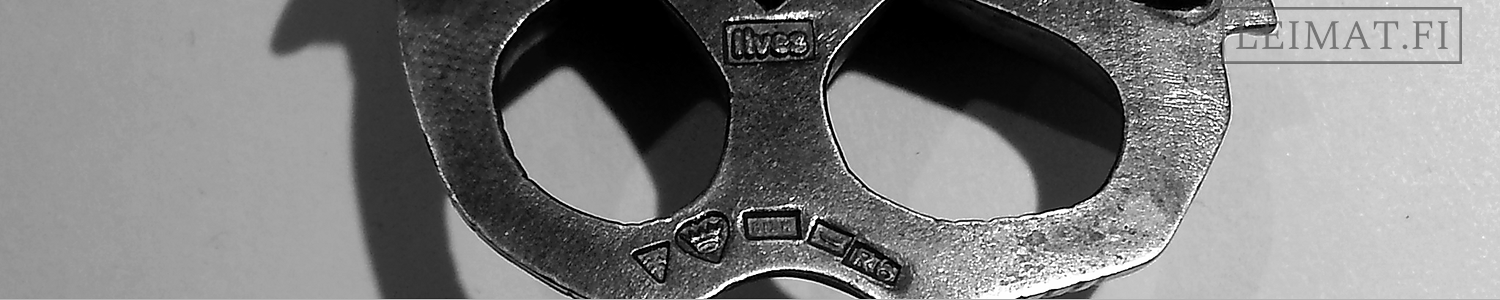
Ilves
Kirsti Ilvessalo (1920–2019), textile artist. She studied at the Central School of Applied Arts and specialised in ryijy rugs. She also designed jewellery, enamel work and objects for Kalevala Koru and Tillander.
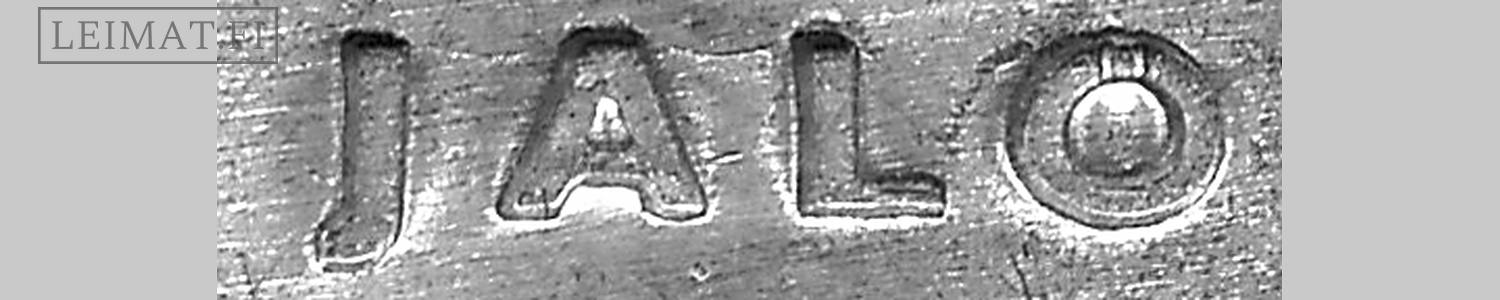
JALO
This design mark, in this form and size, has been used since 2002. A smaller, conventionally sized JALO responsibility mark has also been registered with Tukes since 2004.

JORMA LAINE
Jorma Laine (1930-2002), designer. Designed jewellery at, for example, Kultateollisuus and Turun Hopea.
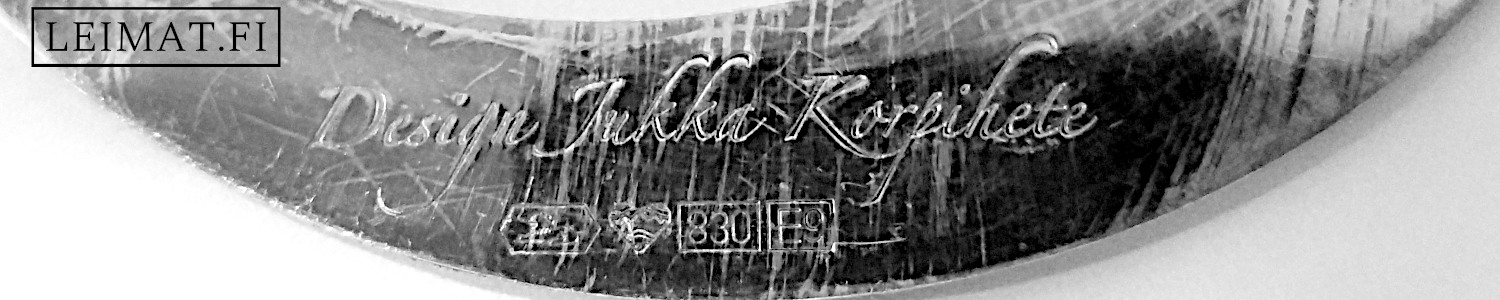
JUKKA KORPIHETE
Jukka Korpihete (b. 1976) graduated as a designer from Häme University of Applied Sciences. He is particularly known for lighting design and has also designed silver objects for Kultakeskus since 2005.
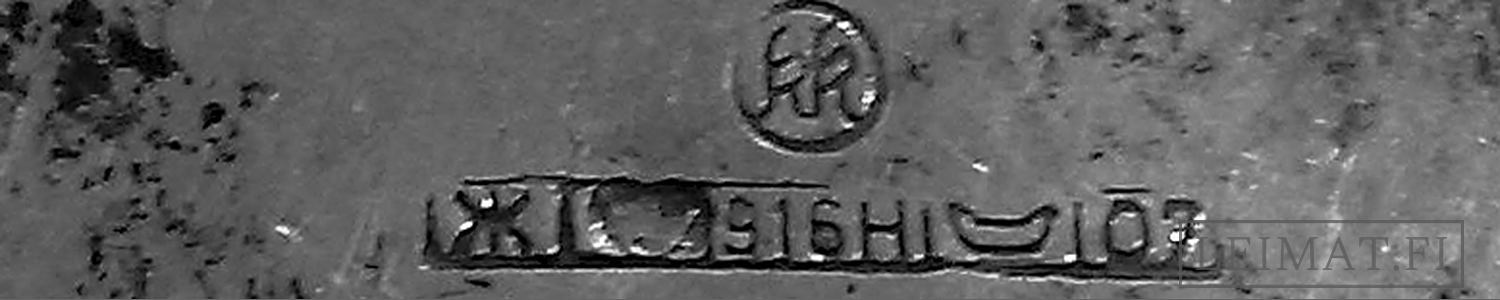
KALEVALA KORU
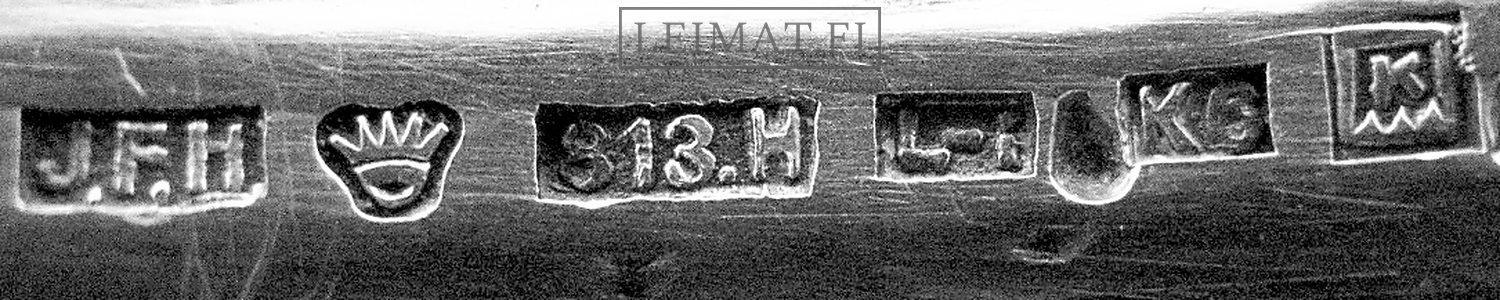
Kalevala Koru Oy’s round design mark has been used since 1941 and has also served as a responsibility mark since 1980. It was registered as an official trademark in the 1940s; applying it to products such as bronze jewellery helped protect them against copying. Kalevala Koru also used the pictured responsibility mark formed from two back-to-back letter Ks from 1957 to 2003.
KALEVALA KORU
In 1937 Kalevala Koru began selling jewellery. Originally they had only 40 designs based upon historic pieces of jewellery, but by 1947 there were more than 300 designs. Over time their historic jewellery designs have been joined by more modern designs. During the period 1937-1941 Kalevala Koru used the design mark of a K inside a square with a serrated base. Since the mark was never registered as an official responsibility mark, it was added at the end of a mark series as a design mark. The photo shows jewellery made by Johan Ferdinand Henriksson in Lahti in 1939, with the Kalevala Koru design mark (1937-1941) at the end.

KAUNIS KORU OY
This square mark was generally struck at the end of the company’s jewellery mark series from 1957 to 1989 (and in some cases 1993), because it was not registered as an official responsibility mark until 1994. Kalevala Koru Oy acquired Kaunis Koru in 1989, after which the mark was registered as a responsibility mark from 1994 to 2011. On jewellery made before 1989, the responsibility mark often identifies the subcontracting goldsmith: for example HK is Heikki Kaksonen Oy, the HN symbol mark is Helge Narsakka and OM is Osvald Mättö. MKR was used by the company’s own workshop.

KB
Kaj Blomqvist (b. 1939) has designed silver objects for Kultakeskus. He is also a well-known glass designer.
KL
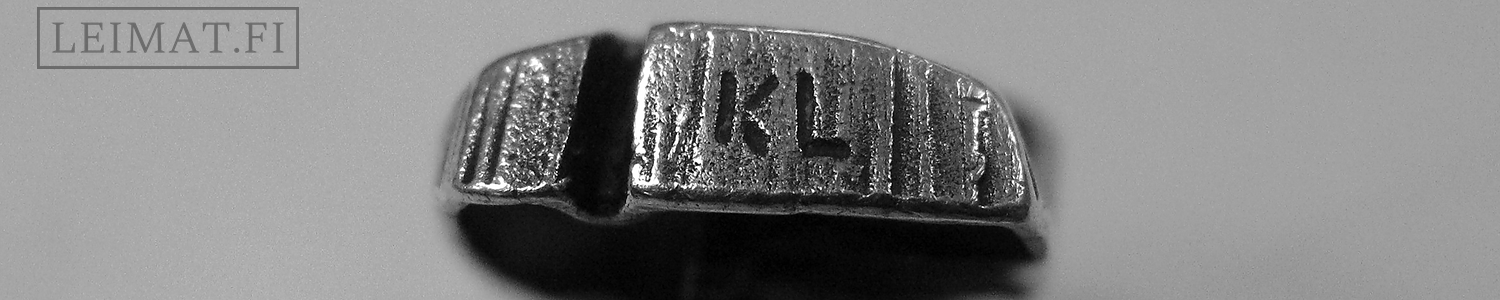
Karl Laine (b. 1945), jewellery designer. Designed jewellery for Sten & Laine and objects for Kultakeskus.
LAPPONIA
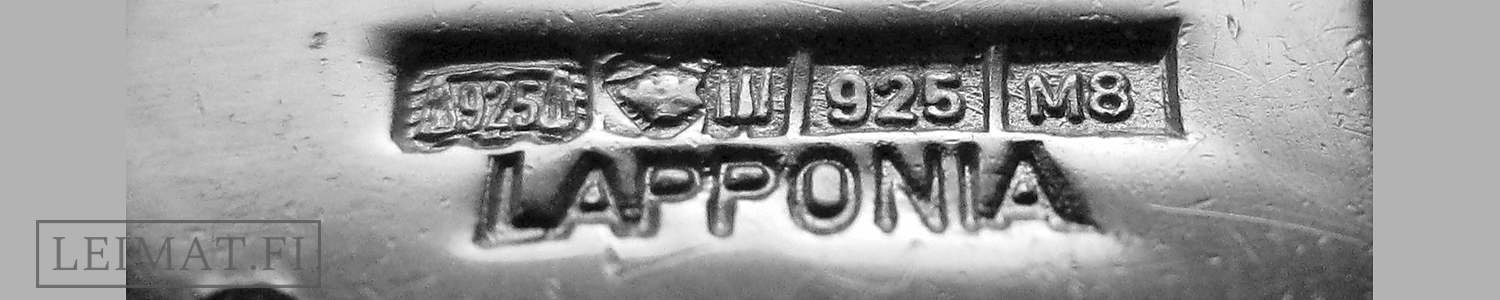
Lapponia Jewelry Oy’s symbol responsibility mark—based on the letters L and J with a crown between them—has been used since 1968. In its early years the company was named Kruunu-Koru Oy. Objects are also often marked with the company’s full name.
Liisa
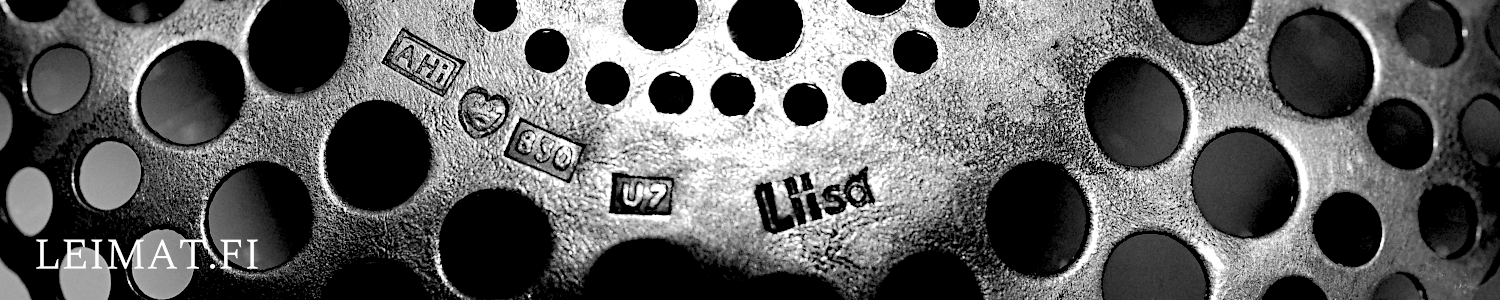
Liisa Vitali (1918–1987), jewellery artist. She began making jewellery at home on a small scale during the 1950s. Her designs were produced, either as unique pieces or in series, by Vitali herself as well as Aatos Hauli (AHi), Mauri Sarparanta (MSS), Westerback Ky (NW) and Kultakeskus (lion mark).
Design marks
M–R
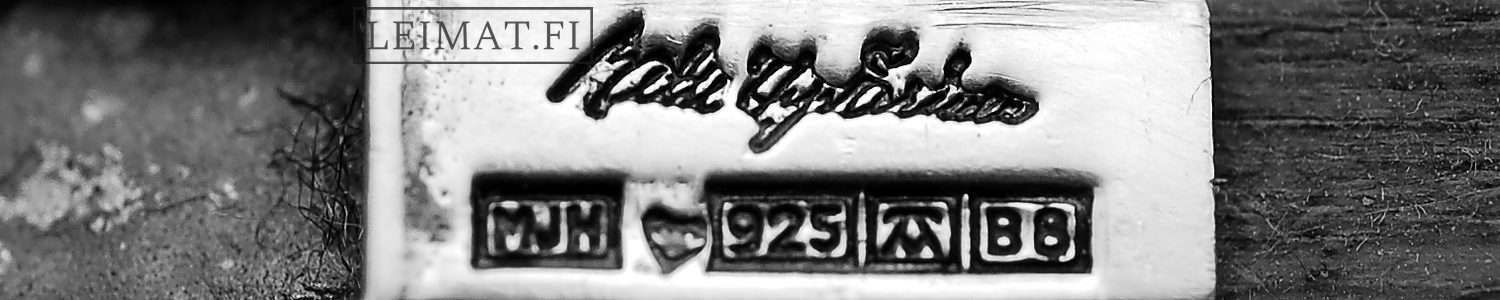
MATTI HYVÄRINEN
Matti Hyvärinen (1937-2017), jewellery artist and goldsmith. Awarded several international jewellery design prizes. Designed for Sirokoru.

MH
Mauno Honkanen (b. 1931), designer and artist. Graduated from the Institute of Industrial Arts. Artist and art director at Koruteollisuus Tillander / Tillander Oy 1956 – 1989. His designs include the Tähkä silver tableware set, chains and medals. The marks are on an object produced by Koruteollisuus Tillander in 1957.

MV
The Martti Viikinniemi jewellery workshop, Heinola.
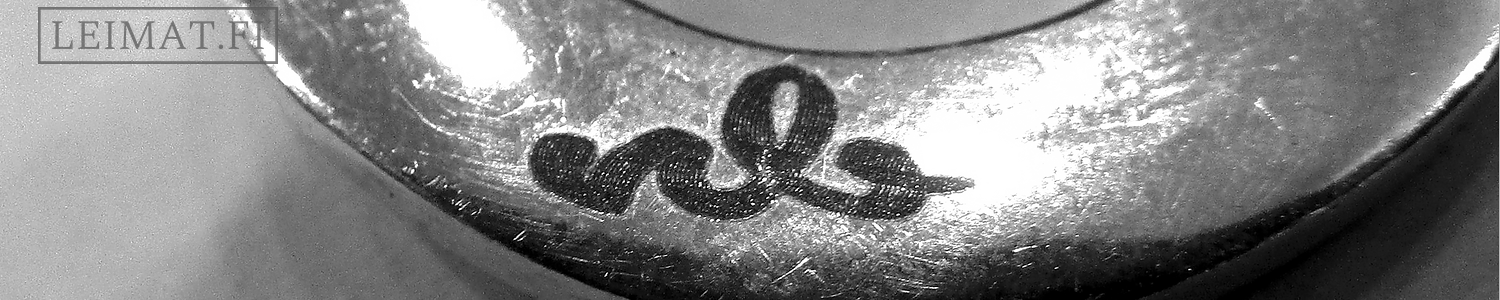
nb
Nikolai Babitzin.
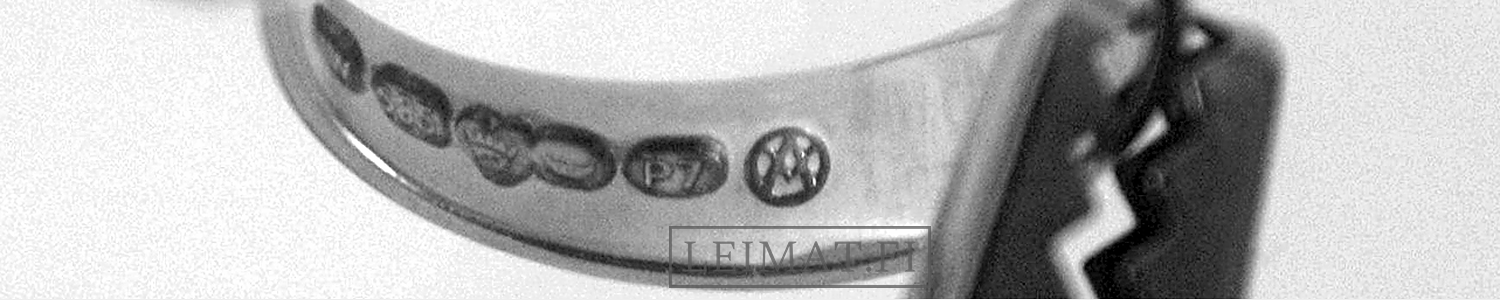
OLLI AUVINEN
Master goldsmith Olli Auvinen (1933–2007) began his career at G. Buchert in 1949 before moving to Alppikulta as a designer. He also designed jewellery for Westerback during the 1960s. In 1965 he became a goldwork teacher at the Finnish Goldsmith School and eventually its director. He studied metalwork and sculpture at the Institute of Industrial Arts.

OWE JOHANSSON
Owe Johansson (b. 1939), internationally known Swedish silversmith and designer. Started his career in 1965 and achieved fame at the 1968 Ungt Svenskt Silver fair. Designed jewellery and objects for Finnish producers as well. The mark is on an object stamped by Kultakeskus in 1973.

PEKKA TURTIAINEN
Pekka Turtiainen used the responsibility mark PT in Helsinki from 1968 to 1996. The illustrated mark is on a silver ladle from 1978.
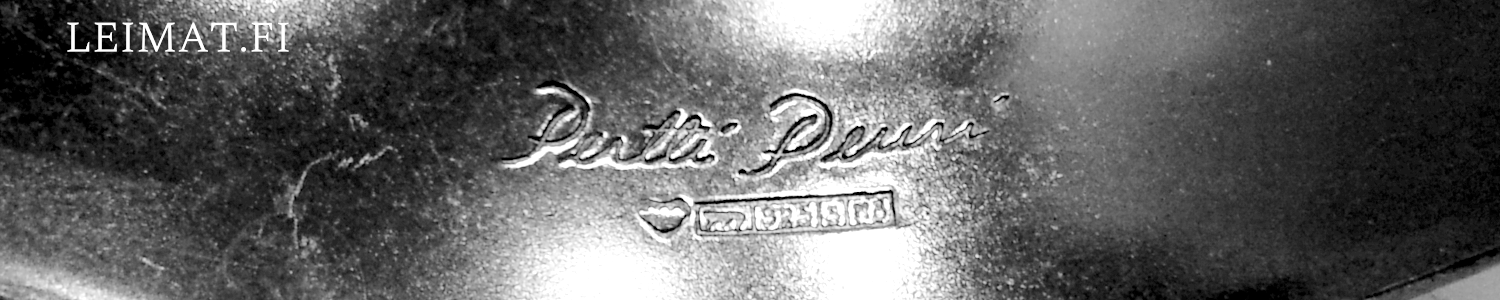
PERTTI PEURI
Pertti Peuri (b. 1943), goldsmith and jewellery artist. He designed jewellery for Sten Ky during the 1980s and 1990s. The illustrated mark is on a piece made by Sten Ky in 1988. Peuri’s design mark is also used together with his own responsibility mark—the Tukes catalogue’s symbol mark no. 155—on unique jewellery and objects.

PER ÅKE
Per-Åke Johansson (b. 1945), a silversmith who moved from Sweden to Åland. He studied and ran his own workshop in Stockholm before moving to Mariehamn during the 1980s, where he continued operating his own workshop. The illustrated marks are on a brooch made by Johansson’s workshop (PÅJ = Silversmeden P-Å) in 1995.
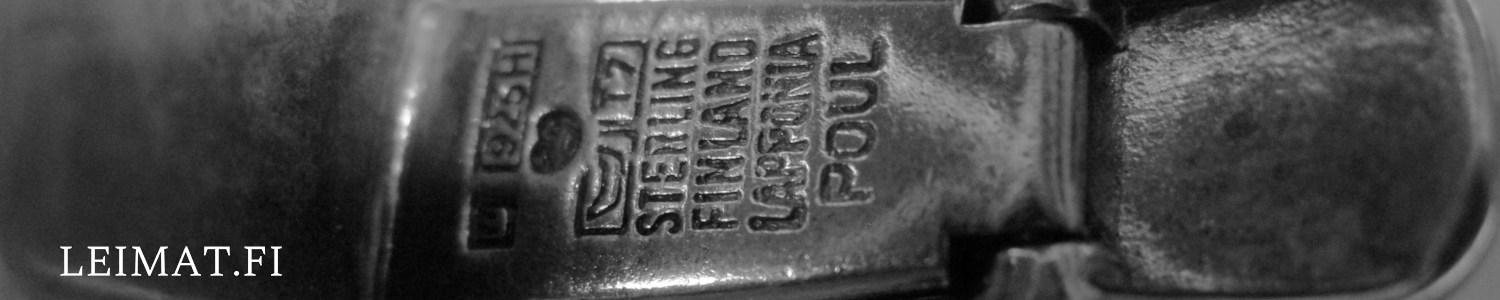
POUL
Poul Havgaard (1936-2011), Lapponia Jewelry designer since 1971. His jewellery is based on organic shapes. The marks in this image are Lapponia's cufflinks from 1972.

PP
Pekka Piekäinen (1945 – 2004), artist, watchmaker and silversmith. Designed silver objects, jewellery and jewellery watches for Kultakeskus, Auran Kultasepät, Tarkiainen and Platinoro. Received the State Prize for Art and Design in 1976.
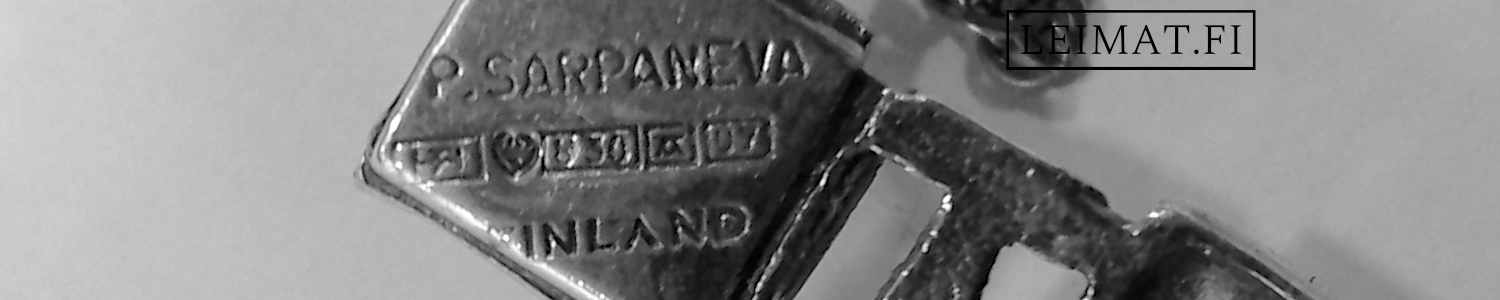
P.SARPANEVA
Pentti Sarpaneva (1925–1978), designer. He graduated from the Institute of Industrial Arts and designed jewellery for Kalevala Koru and Turun Hopea, among others.

PT (or TP)
Unknown artist. The mark appears on an object made by Auran Kultaseppä Oy in 1974.


REIJO SIRKEOJA, RS
Reijo Sirkeoja, silversmith. He studied at the Finnish Goldsmith School and operated his own art-silversmithing workshop in Tampere from 1953 to 1965. Its products carried the responsibility mark RMS. Sirkeoja also designed silver objects for Kultakeskus.

R. RAITILA
Reijo Sakari Raitila (b. 1932), metal artist. He studied at the Finnish Goldsmith School from 1950 to 1952 and graduated from the Institute of Industrial Arts in 1956. After one year at Pirkan Kulta, he ran his own silver business from 1957 to 1971 and subsequently a design studio. He subcontracted for Pirkan Kulta and taught art metalwork for 40 years. His work carries his RSR responsibility mark and symbol mark no. 119.
Design marks
S–W
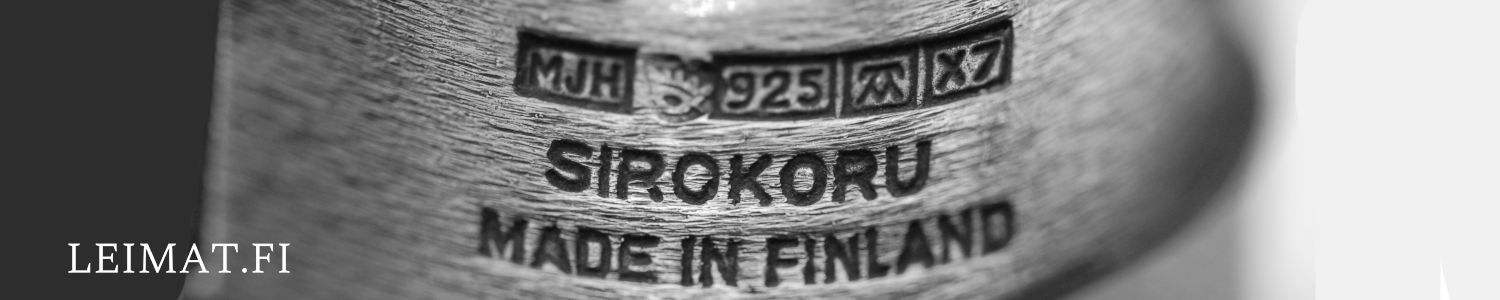
SIROKORU
Jewellery artist Matti Hyvärinen (b.1937) founded Sirokoru in 1958 and specialised in cast jewellery. Hyvärinen has gained a number of jewellery awards. He has also been selected as Goldsmith of the Year in 1987. These marks are on a silver ring from 1975. Marked with Sirokoru and MJH responsibility mark.


ST
Seppo Tamminen (1944-2012), jewellery artist. His designs have been produced by his own studio as well as by Merkkikeskus Sorsa and Hopeajaloste. Alongside the ST mark he has also been using his full name. The mark is on a brooch stamped by Merkkikeskus Sorsa in 1967.
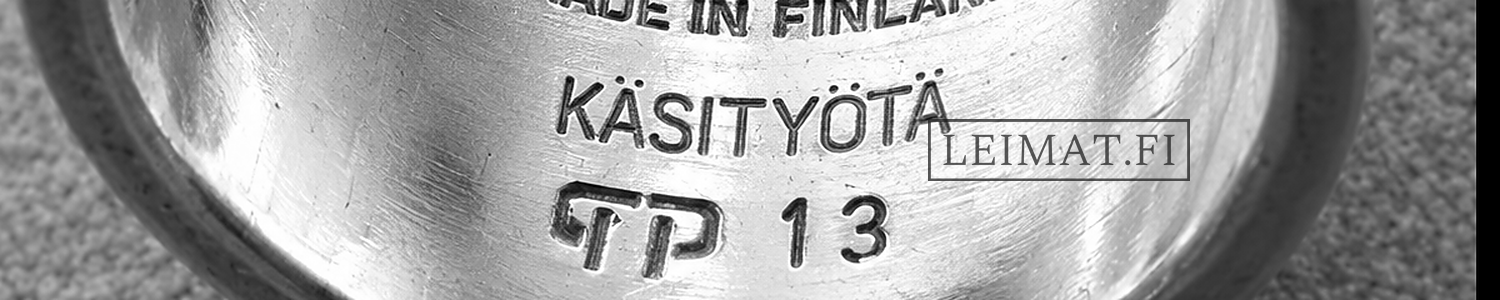
TAISTO PALONEN
Designed jewellery for Kultateollisuus in the 1970s.

TIMO MUSTAJÄRVI
Timo Mustajärvi (b. 1969), gemmologist and goldsmith. He studied at the Lappeenranta Institute of Arts and Crafts and the Lahti Institute of Design, and worked in London for a year. His company Jalo is based in Fiskars village; in summer he has also maintained a second studio in Suomenlinna.


TW
Kultakeskus continues to produce Tapio Wirkkala (1915-1985) designs. His design mark is shown as initials at the end of the mark series.

VEIKKO
Unknown maker who had this handmade object inspected and marked as a private customer of Inspecta Oy.

VH
Väinö Hamara (1907–1964), master goldsmith. He studied and later taught at the Central School of Applied Arts. He established his own company in 1933, having previously worked for Kultala Oy and Taito Oy. The mark was used on silver objects designed by Hamara from the 1950s until the early 1990s.


WECKSTRÖM
On the illustrated piece of jewellery from 1963, the responsibility mark is BRW (Björn R. Weckström). The framed mark is on a necklace made by Veikko Reinikka in 1960.